NEWS
Body Perspectives conference sparks important conversations about dancer health and body image
Share
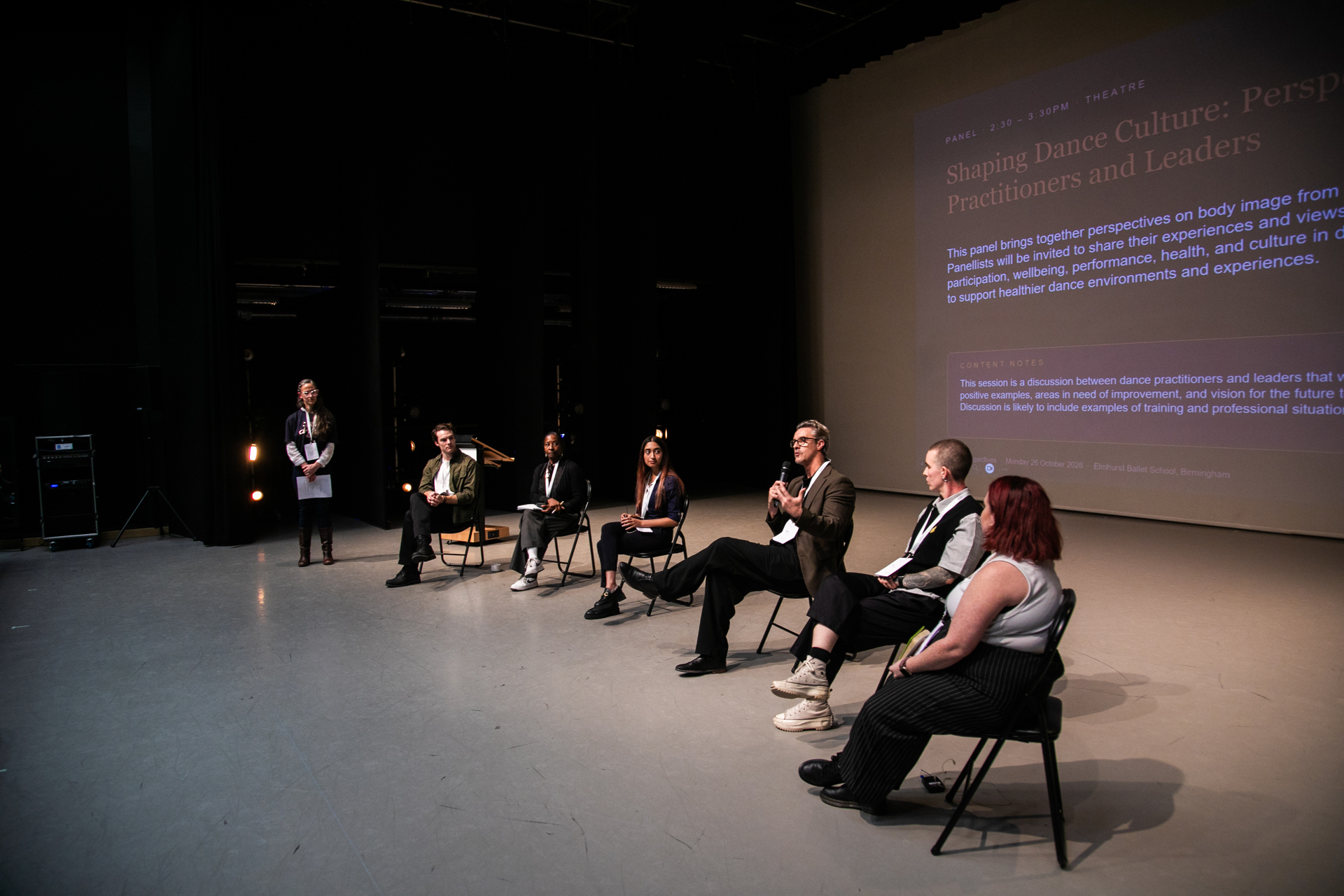
Image credit: One Dance UK by Dani Bower
What does it take to create a dance industry where dancers feel supported in their bodies, and where their health is valued as much as their performance?
That question was at the heart of Body Perspectives, which brought dance professionals together at Elmhurst Ballet School in Birmingham on Monday 26 October for a day of honest discussion about body image and the changes needed across the sector.
The conference welcomed people from across the dance industry, including those working in dance science, education and professional companies, alongside freelance practitioners. While their experiences and roles differed, there was a shared desire to make dance a healthier place for those working and training within it.
Some of the conversations were difficult, particularly when they challenged attitudes that have been part of dance culture for generations. But there was also a sense of optimism. Throughout the day, delegates were keen to exchange ideas and consider what they could do differently in their own settings.
The conversations continued beyond the conference sessions in interactive spaces around the venue. Delegates could write uplifting and supportive messages on the mirrors in the bathrooms for others to see.
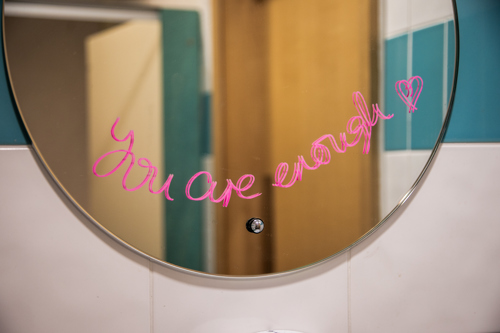
Social media detox stations encouraged people to reflect on the accounts they followed and remove those that negatively affected how they felt about themselves. There were also quieter spaces where delegates could read books and resources on body image and dancers' wellbeing, including:
The Body Confidence Book: Respect, Accept and Empower Yourself by Prof Phillippa Diedrichs and Naomi Wilkinson
Nourishing Dance: An Essential Guide on Nutrition, Body Image, and Eating Disorders by Monika Saigal
Overcoming Worries About Body Image and Eating: A Self-help Guide for Teenagers by Anne Stewart, Caz Nahma, and Joanna Adams
Kinaesthesia and Visual Self-Reflection in Contemporary Dance by Shantel Ehrenberg
These activities gave people a chance to engage with the themes of the day in a more personal way.
Chaired by Erin Sanchez, Head of the National Institute of Dance Medicine and Science at One Dance UK, and senior performance nutritionist Mhairi Keil, the conference encouraged those attending to reflect on their own practices and the influence they have on dancers' experiences.
"Body image is foundational to our psychological experiences and health as human beings and has profound impacts on our experiences in dance. The power and beauty of dance is in individuality and each person’s unique expression. Every body is a dancer’s body, every body has an important place in our dance community, and every body is welcome here," said Erin Sanchez, Head of the National Institute of Dance Medicine and Science.
"Our vision is to create a space where dancers, teachers, healthcare professionals and leaders can come together to have honest conversations about body image, learn from each other, and celebrate the excellent work already taking place across the dance sector. By connecting people, sharing experiences and highlighting practical solutions, we hope to empower individuals and organisations to make meaningful changes that support positive body image for dancers of all ages, stages and genres. Ultimately, we want to help shift the focus from appearance to artistry, functionality, health and wellbeing, creating environments where dancers feel valued, supported and able to thrive. Through collective learning and action, we hope this conference becomes a catalyst for healthier, more inclusive and sustainable cultures across dance," said Mhairi Keil, Performance Nutritionist.
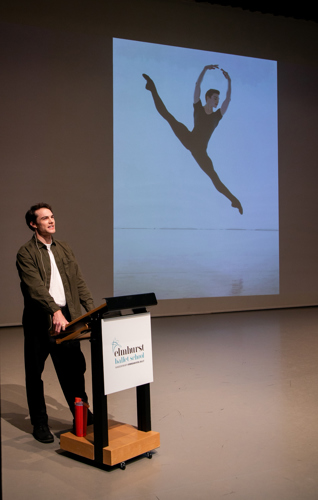
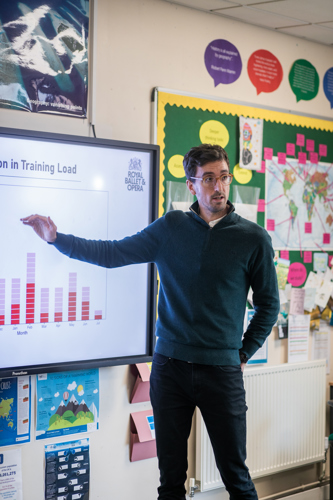
The day began with a deeply personal keynote from Royal Ballet soloist David Donnelly, who spoke openly about his experiences of disordered eating during vocational training and the early years of his professional career.
Sharing the physical and emotional impact of relative energy deficiency, Donnelly reflected on his journey towards a healthier relationship with food and body image, and the difference that the people around him had made.
He encouraged those working in dance to educate themselves on these issues and think carefully about how they communicate with dancers. His reflections showed how important it can be to create an environment where someone feels safe, even when those around them may not know what they are going through.
Reflecting on someone who had helped him during a difficult period, Donnelly shared:
“Without prying into my personal situation, he simply created an environment that felt like it facilitated my healing.”
It was a particularly moving moment, highlighting how much of a difference someone's approach can make without them necessarily realising it.
Donnelly also spoke about respecting the traditions of dance while recognising the need for change.
“It’s about moving forward with a nod to tradition, but doing so in a constructive way that makes people feel seen, heard and understood.”
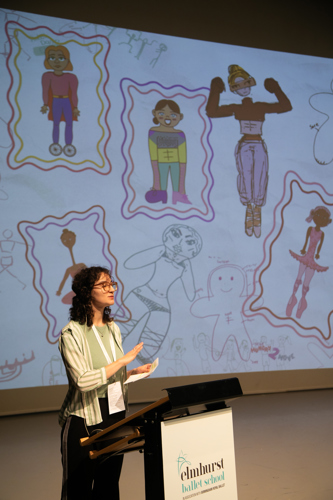
The pressures experienced by young dancers were also brought into focus by Romy Ashmore-Hills, co-founder of Hungry 2 Move, who presented findings from the Arts Council England-funded Hungry 2 Dance project.
Involving 339 young dancers aged 11 to 25, the research explored the impact of comparison and appearance-related pressures within dance training. It also raised questions about what happens to the enjoyment that first draws so many young people to dance.
“We found that young people come to dance with so much enjoyment. Dance is about enjoyment and community, but somewhere along the way in their training, they seem to lose that,” said Ashmore-Hills.
For Ashmore-Hills, seeing so many people come together to discuss these issues was an encouraging sign.
“It’s really inspiring today to see so many people coming together, talking and networking towards the same goal of making sure dancers can keep that enjoyment and passion for why they came to dance in the first place.”
The breakout sessions gave delegates the opportunity to explore some of the issues raised in greater depth, with discussions drawing on both research and personal experience.
Karen Sheriff, Founder of Project RED-D, and dancer Eva-Maria Sumner explored Relative Energy Deficiency in Sport (REDs), challenging assumptions about what dancer's health looks like and why risks cannot be judged by appearance alone.
Mhairi Keil examined how body image influences dancers' relationships with food, while Jonathan Bucke, Clinical Lead at The Royal Ballet, explored the links between body image and injury.
Dr Siobhan Mitchell from the University of Exeter discussed the challenges young dancers face as their bodies develop. Zoë Harwood and Dr Kerry Rees from the University of Gloucestershire explored the influence of dance culture on body image and how dancers can be encouraged to develop greater appreciation for their bodies.
Across the sessions, delegates were encouraged to consider how greater understanding could influence the everyday experiences of dancers in their care.
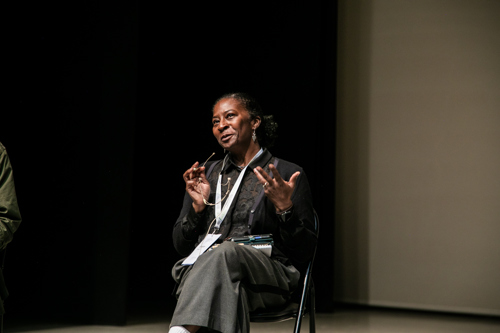
The afternoon panel opened up a wider discussion about the changes taking place across the industry and the barriers that remain.
Panelists included Sharon Watson MBE DL, CEO and Principal of Northern School of Contemporary Dance; freelance Bharatanatyam dancer and choreographer Shriya Sharma; Ruth Anna Phillips, founder of Size Inclusivity; MJ McGibbon, co-founder of Unapologetic and Pride in Kingston; Iain Mackay, Artistic Director of The Royal Ballet School; and David Donnelly.
There was an openness to the discussion, with panelists acknowledging that meaningful progress can be uncomfortable and that people need to be willing to listen to experiences different from their own.
MJ McGibbon spoke about the importance of not allowing the fear of making mistakes to prevent people from engaging in conversations that could help create more inclusive environments.
“In order for us to see more change, more conversations need to be had, and people need to be less scared of making mistakes. It’s okay not to understand something straight away, but we need to be open to learning from other people’s perspectives so we can move forward.”
The responsibility of dance education to lead change was also raised during the discussion.
Iain Mackay, Artistic Director of The Royal Ballet School, spoke about the importance of educational organisations taking action rather than waiting for professional companies to set the direction.
“We are making these changes and looking to make these shifts. As an educational organisation, we have to make that change first, irrespective of what companies are doing, which can sometimes be a bit of a challenge.”
Reflecting on the conversations, Sharon Watson MBE DL spoke about the willingness she had seen throughout the day to challenge established attitudes.
“What I’m taking away from today is that there is a willingness to have this dialogue and a real need for it. People aren’t afraid to challenge the status quo because we know changes need to be made, and we are stronger together when it comes to making them.”
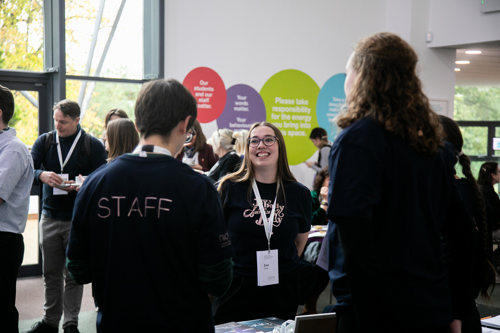
As the conference drew to a close, attention turned to what could happen beyond the room.
Erin Sanchez, Mhairi Keil and Helen Banks, founder of Imperfect Pointes, led the concluding session, encouraging delegates to think about how the day's discussions could translate into practical changes within their own dance environments.
There was a sense throughout the conference that the people in the room genuinely cared about improving dancers' experiences. The opportunity to hear different perspectives, particularly from those working in areas of the sector that might not often come together, made the conversations all the more valuable.
Delegates left with new connections and ideas they could take back into their own settings. One delegate said:
"We came away realising we weren't the only ones who wanted change. Sometimes you wonder whether your experiences matter, or if you've instead overthought them, but yesterday I realised we are just a drop in the ocean, and the need for change is urgent."
The day encouraged everyone to consider what they could change in their own practice, however small, to help create healthier and more supportive environments for dancers.
“Several moments stood out, but the overarching message that had the greatest impact on me was the importance of moving from awareness to prevention.”
Moving forward, action is the focus. Conference organisers are planning a series of educational webinars and a guidance tool for implementing change in dance organisations. Those interested in this work can take action through the following:
Everyone can engage in learning more about body image through MIND and YoungMinds, body image, self-care and eating disorders prevention through Beat, and relative energy deficiency in dance through Project RED-D
Everyone can engage with the organisations involved in the conference and their excellent work
Dance organisations can engage in an evidence-based, peer-led programme that helps change dance culture and the unrealistic body ideals, through The Body Project Dancers
Dancers aged 18-24 can take part in collaborative research between the University of Worcester and Hungry 2 Dance on dancers' body image
Healthcare practitioners can register for the last remaining places on the Bone Stress Injury in Dance course tomorrow, 31 October
Be part of the conversation and help drive change. If you'd like to learn more about the work being done to advocate for healthier, more supportive approaches to body image in dance, or find out how you can get involved, please contact the National Institute of Dance Medicine and Science (NIDMS).